 tokki
Korean for Beginners: Start From Zero With Real Speech
Korean for beginners: learn Hangul first, then 10 everyday phrases, then real clips. A day-by-day first-week plan, common mistakes, and the best app to start.
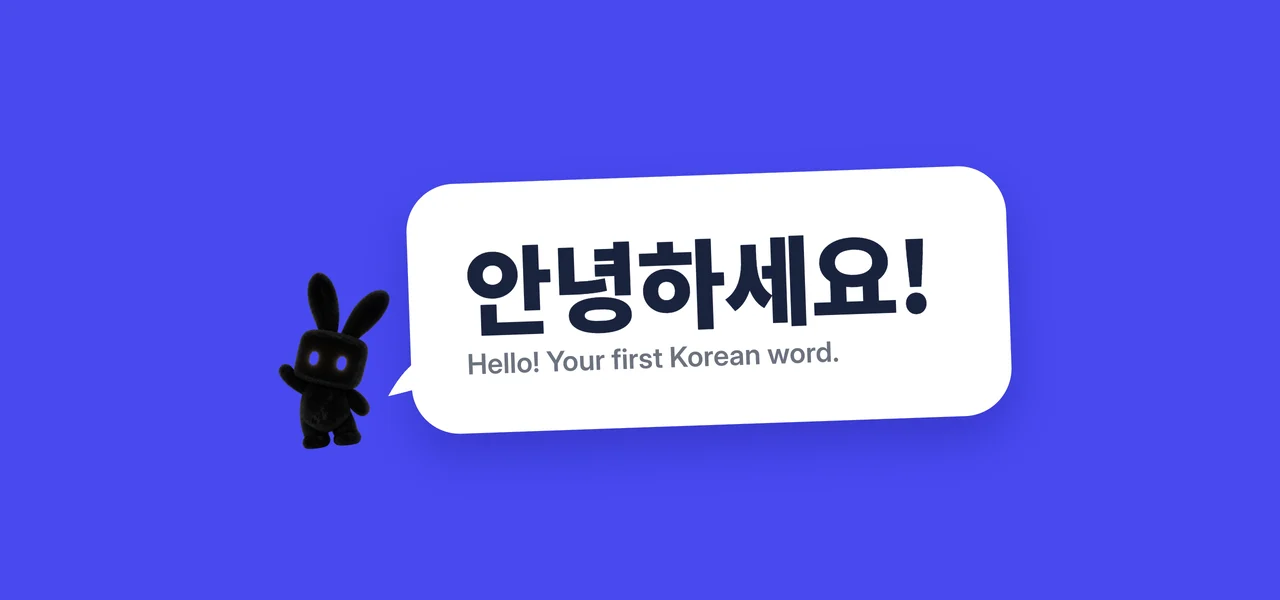
Korean for beginners comes down to three steps, in this order: learn to read Hangul, the Korean alphabet, then learn ten polite phrases, then listen to a little real Korean every day. You can start all three in one week. You will not follow a conversation by day 7, but you will read slowly, say useful lines out loud, and pick out your first words in real speech.
This guide gives you what you need to learn Korean from zero: the phrases, a plan for each day, and the mistakes to skip. You do not need a textbook.
We make Tokki, an app to learn Korean from short clips of real speech. This guide says where it fits, and where another app fits better.
Where to start (the first 3 things)
- Learn Hangul. It has 24 basic letters, and most beginners can sound out words after a weekend. Everything else gets easier once you can read.
- Learn ten polite phrases. They give you something to say on day 3, and they teach your mouth the sounds of Korean.
- Listen to real speech. Short clips of native speakers, made for Korean viewers. You will understand very little at first. That is fine, because the goal is to train your ear from the start.
Grammar comes after this first week. When you are ready, the guide to the best way to learn Korean shows how to add it.
Learn Hangul first
Hangul is the easiest part of Korean, so it makes a good first win. Each letter stands for a sound, and letters stack into square blocks, one block per syllable. For example, ㅎ (h) + ㅏ (a) + ㄴ (n) makes 한 (han).
Do not stay on romanization, the Korean words spelled in English letters. It is a rough guide to sounds English does not have, and real signs and subtitles use Hangul anyway.
Our guide to how to read Hangul in a weekend has a free chart and a two-day plan. A pen and the chart are enough. If you would rather learn on your phone, Tokki has short Hangul lessons where you trace each letter by following an arrow.
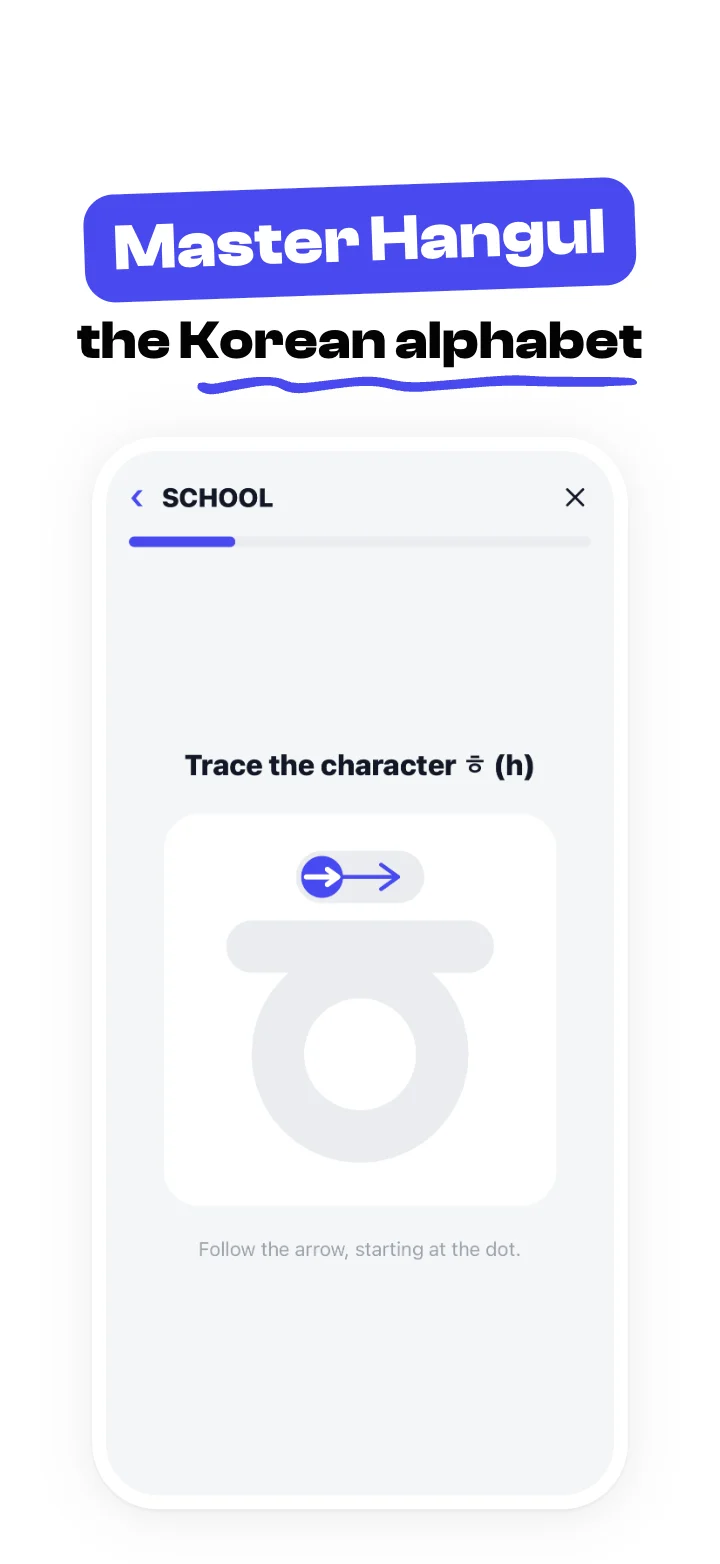 Trace each letter in a Tokki Hangul lesson.
10 phrases you will use every day
These ten cover greetings, thanks, apologies, and the small moments of a normal day. All of them are polite, so they are safe with anyone you meet.
- 안녕하세요 (annyeonghaseyo): hello. Use it any time of day, with anyone.
- 감사합니다 (gamsahamnida): thank you. Use it in shops, in restaurants, and with strangers.
- 네 · 아니요 (ne · aniyo): yes · no. 네 also means "I hear you" or "OK."
- 괜찮아요 (gwaenchanayo): it's okay. It also means "I'm fine" and a polite "no, thanks."
- 잘 먹겠습니다 (jal meokgesseumnida): literally "I will eat well." Say it before a meal, often to the person who cooked or paid.
- 죄송합니다 (joesonghamnida): I'm sorry. This is a polite apology.
- 저기요 (jeogiyo): excuse me. Use it to get attention, for example from a server.
- 이거 주세요 (igeo juseyo): this one, please. Point at the menu or the item.
- 잘 모르겠어요 (jal moreugesseoyo): I'm not sure. Use it when you do not know or did not understand.
- 안녕히 계세요 (annyeonghi gyeseyo): goodbye. Say it when you leave and the other person stays.
If the other person is the one leaving, say 안녕히 가세요 (annyeonghi gaseyo). If you are traveling, add 얼마예요? (eolmayeyo, how much is it?).
The romanization above follows speech, not spelling. 감사합니다 is written with ㅂ in 합, but the ㅂ turns into an m sound before ㄴ: gam-sa-ham-ni-da. You will meet many sound changes like this one. Learn them by ear, one phrase at a time.
Some of these blocks use letters beyond the 24 basics, such as ㅔ and ㅚ. Do not stop to study them yet. Use the romanization for this first week, and cover it as soon as you can.
To learn a phrase, hear it first. A dictionary app with audio, such as Naver Dictionary, will play it. Then say it out loud five times at the same speed.
Real speakers will not always say these phrases as clearly as a dictionary does. In a quick greeting, 안녕하세요 can sound closer to "anyaseyo." Learn the clear version first. Clips then train you to catch the fast one.
Your first week, day by day
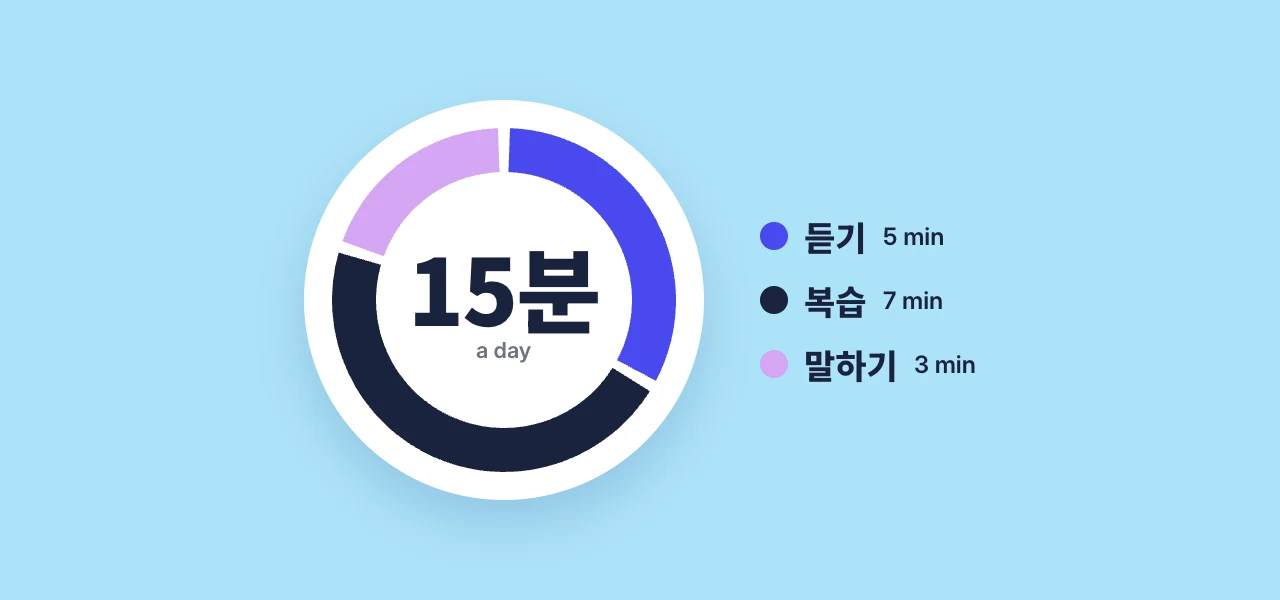
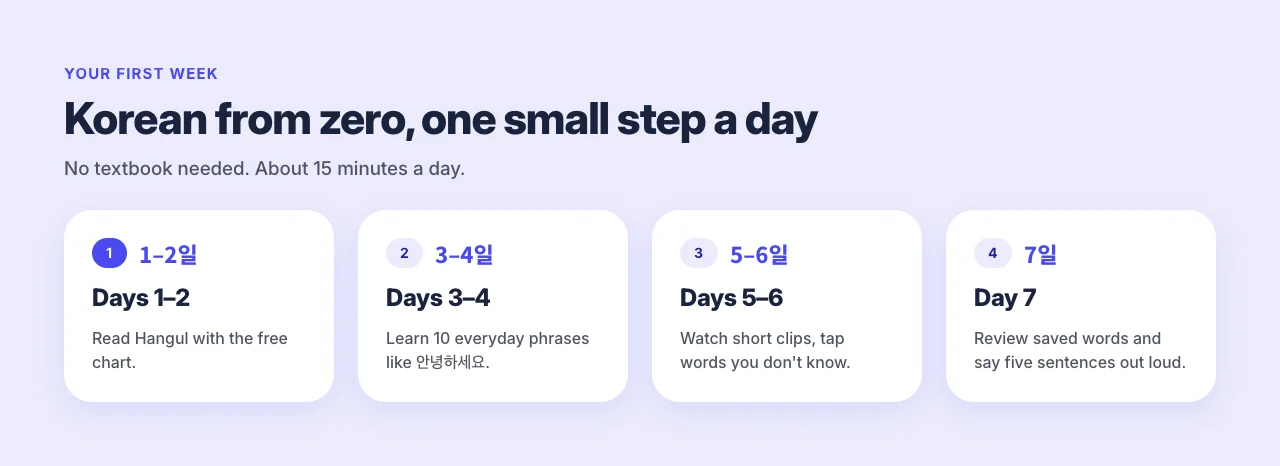 About 15 minutes a day, with more time for Hangul on days 1 and 2.
From day 3, about 15 minutes a day is enough. Days 1 and 2 ask for more: plan on two or three short sessions, because you are learning a whole alphabet.
| Day | Focus | What you do |
|---|---|---|
| 1 | Letters | Learn the 14 consonants and 10 vowels from the free chart. Say each one out loud as you write it. |
| 2 | Blocks | Build syllable blocks, then read real words: 한국 (Korea), 서울 (Seoul), 김치 (kimchi). |
| 3 | Phrases 1–5 | Hear each phrase, read it in Hangul, and say it out loud five times. |
| 4 | Phrases 6–10 | Do the same. Then cover the Korean and say all ten from the English. |
| 5 | First clips | Watch two or three short clips with Korean subtitles. Find a word you can read. Look up three words and save them. |
| 6 | More clips | Review yesterday's three words. Watch two new clips and save three more. |
| 7 | Review and speak | Review all your saved words. Then say five sentences out loud: phrases from the list or short lines from your clips. |
On days 5 and 6, keep your goal small. You are not trying to understand the clip. You are trying to hear one word you know, or read one word in the subtitles. One word is a good result on day 5.
On day 7, record yourself. Say your five sentences into your phone. It feels odd, but next month you will have something to compare against.
By the end of the week, you can sound out Hangul slowly, say ten useful phrases, and catch a few words in real speech. For week 2, move to the 15-minute daily routine: listen, review, and say one line out loud.
Start your first week with Tokki: Hangul lessons, real clips, and review in one app.
Common beginner mistakes
Staying on romanization. It feels faster for a week, then it slows you down. Move to Hangul as soon as you can read it, even if you read slowly.
Memorizing long word lists. Lists of colors, fruit, and animals are easy to find, but real speech leans on small words like 진짜 (really) and 근데 (but, by the way). Save the words you hear in clips. If you hear a word twice, it is worth learning.
Waiting until you feel ready for real Korean. Course audio is clear and slow, and real speech is neither. The longer you wait, the bigger that gap feels. Start with a few short clips in week 1.
Watching with only English subtitles. You end up reading English while Korean plays in the background. Turn on Korean subtitles, even if you only recognize a few words.
Copying casual speech from dramas. Characters in a drama often speak casually because they know each other well. If you say 고마워 (gomawo, thanks) to a stranger, it can sound rude. Keep the polite forms in this guide until you know when to drop them.
Staying silent. Reading and listening feel safe, so speaking gets pushed back. Say every phrase out loud from day 3, even if you are alone.
Installing five apps. A bigger setup does not mean more learning. Pick one tool for each job, and give it a month before you judge it.
Best app for beginners
The best app to learn Korean for beginners depends on what you need first. We make Tokki, so weigh our opinion with that in mind.
| If you want | Use | What it costs |
|---|---|---|
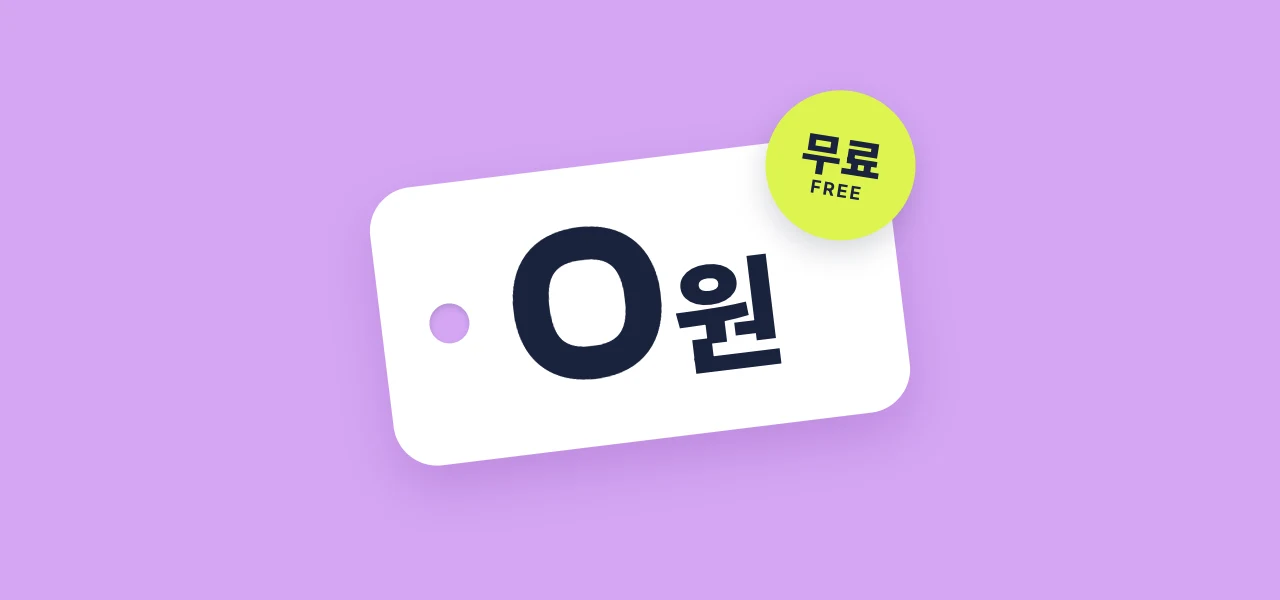
| Real speech from week 1 | Tokki | 7 days free, then a plan |
| A free daily lesson path | Duolingo | Free core course, paid plan optional |
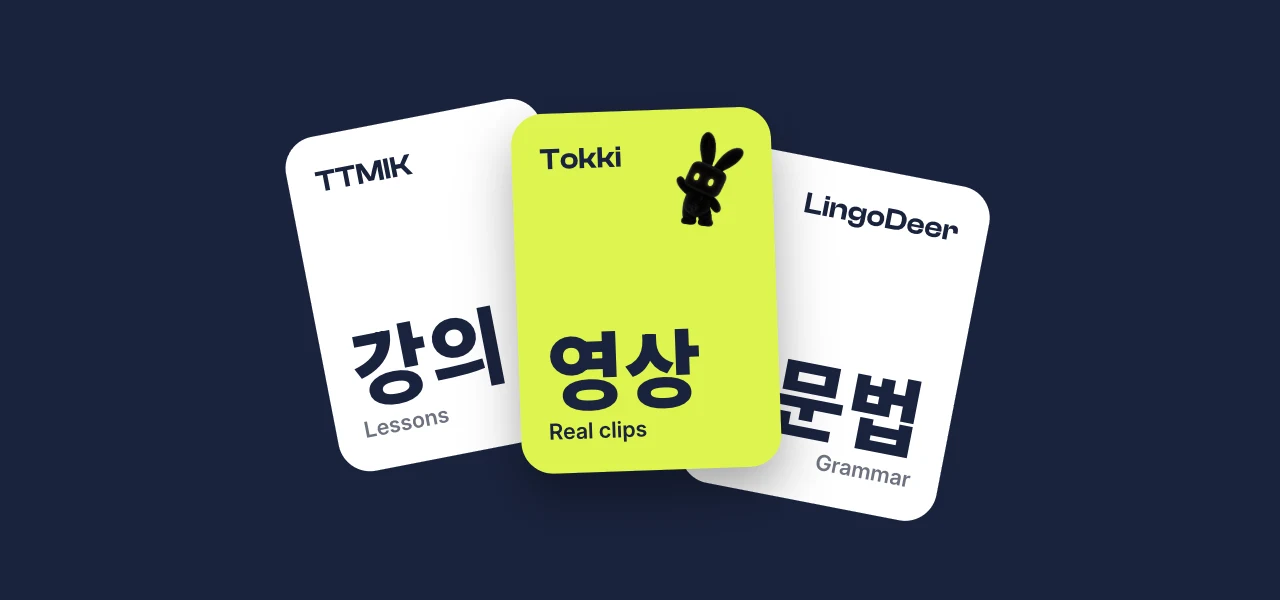
| Grammar taught in order | LingoDeer | Opening lessons to try, then a plan |
| Lessons written only for Korean | Talk To Me In Korean | Free material to start, membership for more |
Duolingo is the easiest free start. It shows you the next step every day, and it includes Hangul. The lines you hear are written for the exercise, so add real listening when you are ready.
Tokki is the pick when real speech is the reason you are learning. You scroll a feed of short clips from Korean creators, and the subtitles are split into words. Tap a word to see what it means, hear how it sounds, and save it. It comes back later on a review card, right before you would forget it.
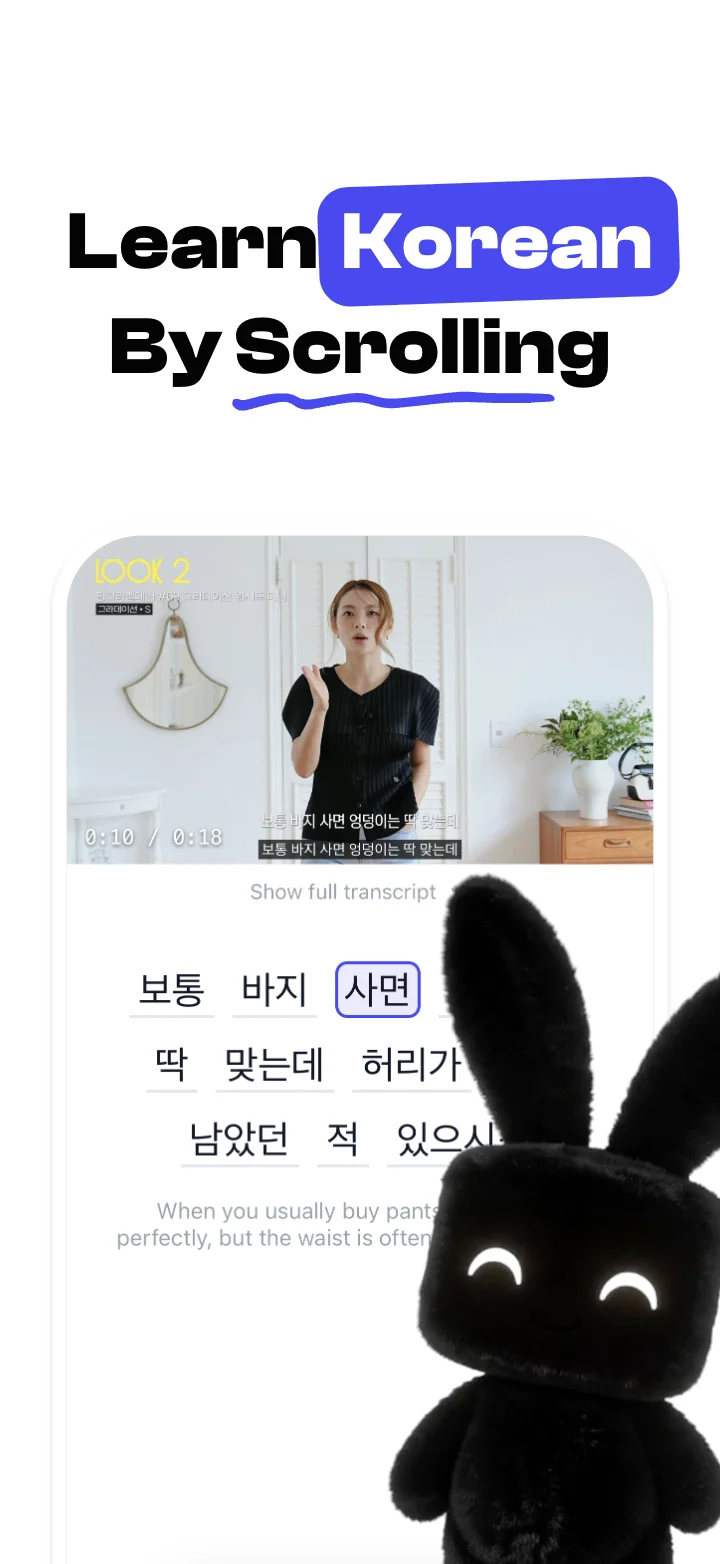 Subtitles split into words, so you can tap the one you do not know.
Tokki does not teach grammar chapter by chapter, and it does not ask you to speak into the phone. Pair it with a lesson app when you want grammar in order.
Many beginners do well with two tools: one lesson app and one place to hear real Korean. To compare your options, see the best free Korean learning apps if you want to start without paying, or the best apps to learn Korean for the full comparison.
Frequently asked questions
Is Korean hard for English speakers?
Yes, but the start is easier than its reputation. The US Foreign Service Institute puts Korean in its hardest group for native English speakers, with an estimate of about 88 weeks, or 2,200 class hours, to reach a professional level in speaking and listening. The hard parts are the word order, with the verb at the end, the small particles, and the levels of politeness. Other parts are easier. Hangul takes about a weekend, standard Korean has no tones, and verbs do not change for I, you, or they.
What should I learn first in Korean?
Learn Hangul first, because everything else gets easier once you can read. Next, learn a few polite phrases such as 안녕하세요 (hello) and 감사합니다 (thank you). Then start listening to short clips of real Korean every day. Add grammar after the first week, using one course or textbook.
What is the best app to learn Korean for beginners?
Duolingo is the easiest free start, because it shows you the next step each day and includes Hangul. LingoDeer suits beginners who want grammar in order. Tokki suits beginners who want real speech early: it has short Hangul lessons, then short clips with subtitles you can tap, and review for the words you save. Tokki is free for 7 days, then a monthly or yearly plan. Many beginners use one lesson app and one place to hear real Korean.
Can I learn Korean by myself?
Yes. You can learn Hangul, core grammar, and a large vocabulary on your own, and you can train your ear with real clips. The one thing you cannot do alone is hold a real conversation. From about week 4, add short talks with a tutor or a language partner, once or twice a week.
Try Tokki
If you want real Korean in your first week, download Tokki. Trace your first letters, watch a short clip, and tap the words you do not know. Your first 7 days are free, on iPhone and Android, with no ads.