 tokki
How to Read Hangul in a Weekend (Free Chart + Practice)
Learn Hangul in a weekend: a free chart of the 24 basic Korean letters, how syllable blocks and final consonants work, and a two-day plan to start reading.
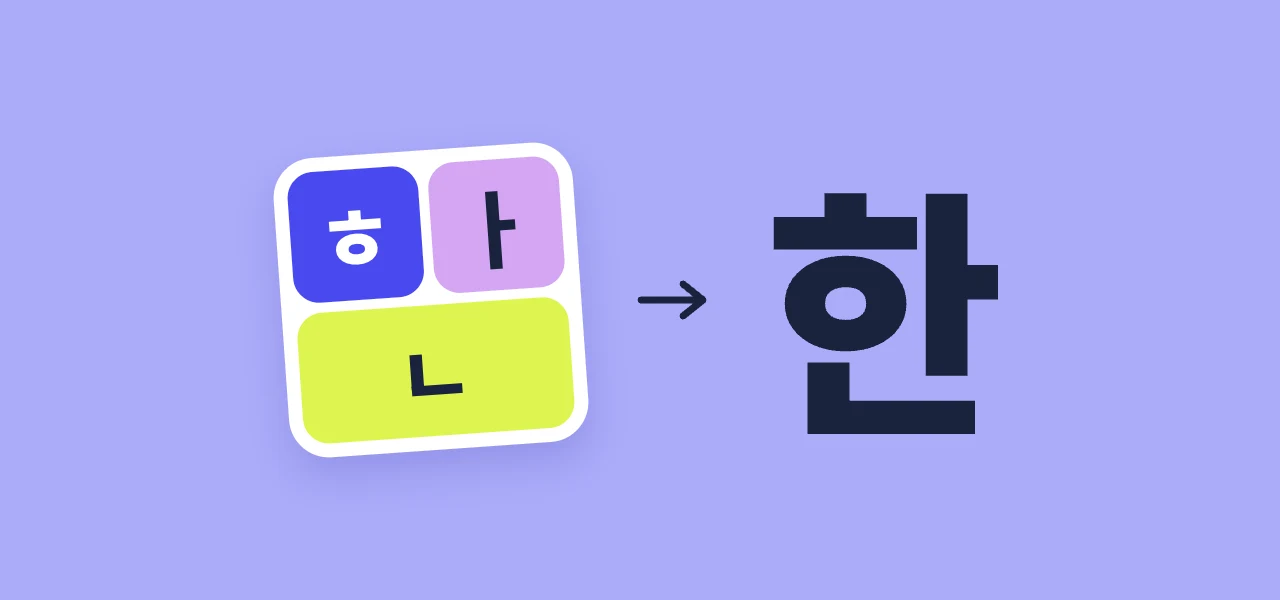
You can learn Hangul, the Korean alphabet, in a weekend. It has 24 basic letters: 14 consonants and 10 vowels. Learn the sound of each letter, then learn how letters stack into square blocks, one block per syllable. Spend Day 1 on the letters and Day 2 on blocks and real words. By Sunday evening you can sound out words like 한국 (Hanguk, Korea) and 김치 (gimchi, kimchi).
Reading fast takes longer. Reading at all takes about two days.
This guide shows you how to learn Hangul step by step, with a free chart and a two-day plan. We make Tokki, an app to learn Korean from real video, and it has Hangul lessons. You do not need it here. A pen and the chart are enough.
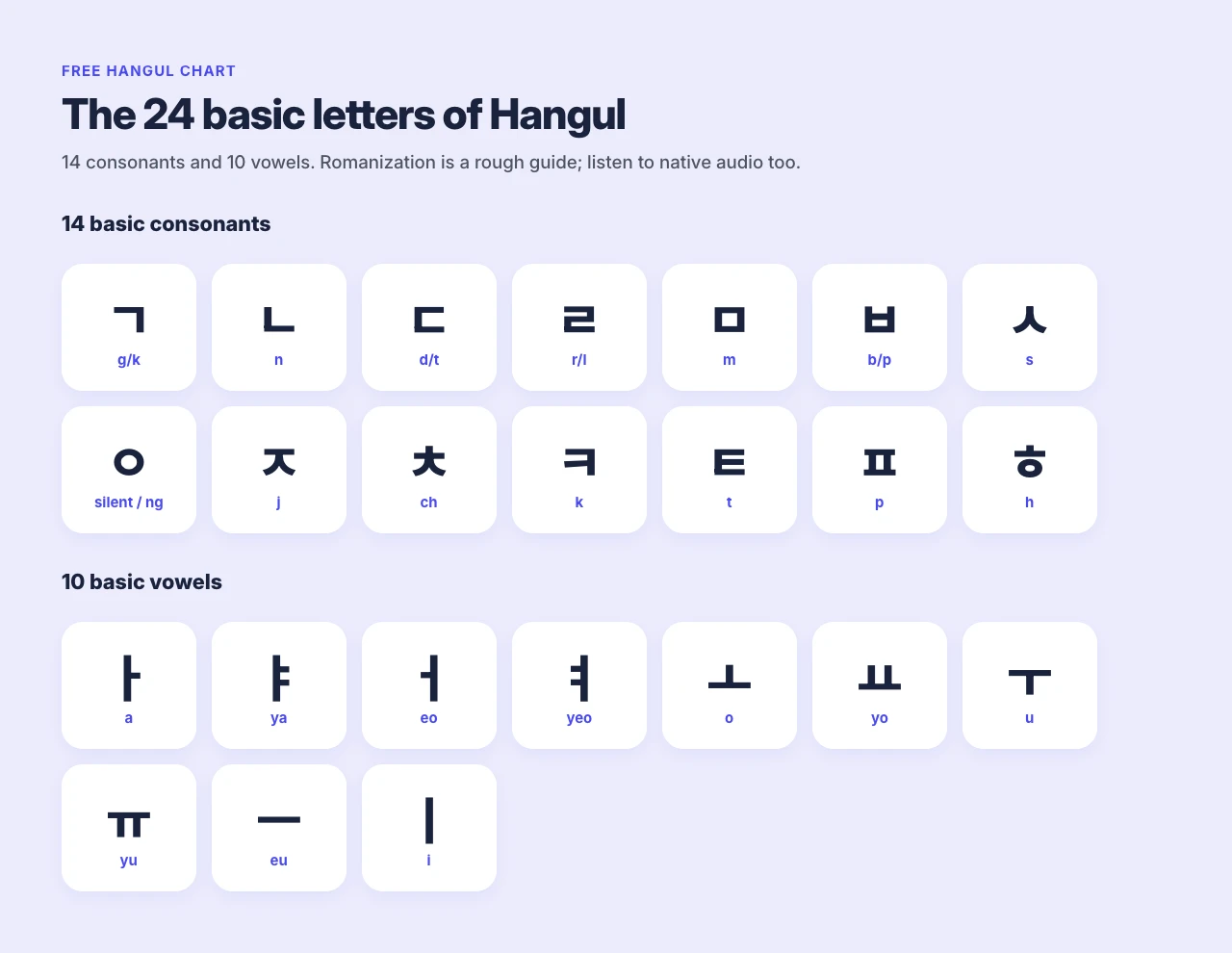 The free Hangul chart. Save it or print it.
The chart is free. Save it to your phone or print it, and keep it next to you for the first week. The tables below give the same letters with example words.
What Hangul is (and why it is easier than it looks)
Hangul (한글, spelled Hangeul in the official romanization) is the alphabet Korean is written in. King Sejong the Great created it in 1443, and it was published in 1446 in a book called Hunminjeongeum, "the correct sounds for the instruction of the people."
Before that, Korean was written with Chinese characters, which took years to learn. Sejong wanted letters that anyone could learn quickly. The 1446 book says a wise person can learn them before a morning is over, and even a slow learner within ten days.
Four ideas make Hangul easier than it looks:
- Consonants copy the mouth. ㄱ shows the back of the tongue lifting to the roof of the mouth, as in g. ㄴ shows the tongue tip touching behind the top teeth, as in n. ㅁ is the closed mouth. ㅅ is a tooth. ㅇ is the open throat.
- Extra strokes add force. Add a stroke to ㄱ and you get ㅋ, a k with a puff of air. ㄴ becomes ㄷ, then ㅌ. ㅁ becomes ㅂ, then ㅍ. ㅅ becomes ㅈ, then ㅊ. ㅇ becomes ㅎ. You learn families, not 14 random shapes.
- Vowels are lines. The original design used a dot for heaven, a flat line for earth, and an upright line for a person. The dot became the short stroke you see today. A short stroke to the right of the upright line gives ㅏ (a). To the left, it gives ㅓ (eo).
- One block is one syllable. Letters do not run in a line like English. They group into a square block for each syllable. 한 is h + a + n.
The 14 basic consonants
The consonants follow Korean dictionary order. The "With ㅏ" column adds the vowel ㅏ (a), so you can say each one out loud.
| Letter | Sound | With ㅏ | Example word |
|---|---|---|---|
| ㄱ | g / k | 가 (ga) | 가방 (gabang), bag |
| ㄴ | n | 나 (na) | 나무 (namu), tree |
| ㄷ | d / t | 다 (da) | 다리 (dari), leg |
| ㄹ | r / l | 라 (ra) | 라면 (ramyeon), instant noodles |
| ㅁ | m | 마 (ma) | 모자 (moja), hat |
| ㅂ | b / p | 바 (ba) | 바다 (bada), sea |
| ㅅ | s | 사 (sa) | 사람 (saram), person |
| ㅇ | silent / ng | 아 (a) | 아이 (ai), child; 강 (gang), river |
| ㅈ | j | 자 (ja) | 자리 (jari), seat |
| ㅊ | ch | 차 (cha) | 치즈 (chijeu), cheese |
| ㅋ | k | 카 (ka) | 커피 (keopi), coffee |
| ㅌ | t | 타 (ta) | 토마토 (tomato), tomato |
| ㅍ | p | 파 (pa) | 포도 (podo), grape |
| ㅎ | h | 하 (ha) | 하나 (hana), one |
A few letters need a note:
- ㄱ ㄷ ㅂ ㅈ are soft at the start of a word. Say them lightly, with almost no puff of air. To English ears, the first sound of 김치 falls between g and k. That is why the official romanization is gimchi, but English spells it kimchi. Between two vowels, these letters sound like a clear g, d, b, and j.
- ㅋ ㅌ ㅍ ㅊ come with a strong puff of air. Hold your hand in front of your mouth. You should feel air on 카, and much less on 가.
- ㅇ has two jobs. At the start of a block it is silent: 아 is just a. At the end of a block it is ng: 강 (gang).
- ㄹ is r or l. Between two vowels it is a quick tap, close to the tt in "butter" in American English. At the end of a block it is an l, as in 서울 (Seoul).
- ㅅ before ㅣ sounds like sh. 시 (si) sounds close to "shee."
The 10 basic vowels
Korean vowels never stand alone. Every block starts with a consonant. When a syllable starts with a vowel sound, a silent ㅇ fills the empty consonant slot: 아 (a), 오 (o). So practice the vowels with ㅇ in front, the way you will see them in real words.
| Vowel | Sound | With ㅇ | How to say it | Example word |
|---|---|---|---|---|
| ㅏ | a | 아 | the a in "father" | 나라 (nara), country |
| ㅑ | ya | 야 | y + ㅏ, as in "yard" | 야구 (yagu), baseball |
| ㅓ | eo | 어 | the u in "up", with the mouth more open | 어머니 (eomeoni), mother |
| ㅕ | yeo | 여 | y + ㅓ | 여기 (yeogi), here |
| ㅗ | o | 오 | the o in "go", with round lips and no w at the end | 오이 (oi), cucumber |
| ㅛ | yo | 요 | y + ㅗ | 요리 (yori), cooking |
| ㅜ | u | 우 | the oo in "moon" | 우유 (uyu), milk |
| ㅠ | yu | 유 | "you" | 유리 (yuri), glass |
| ㅡ | eu | 으 | oo, with flat lips instead of round ones | 스키 (seuki), ski |
| ㅣ | i | 이 | the ee in "see" | 기차 (gicha), train |
Look at the pattern. A second short stroke adds a y: ㅏ becomes ㅑ, ㅓ becomes ㅕ, ㅗ becomes ㅛ, ㅜ becomes ㅠ.
Two vowels need extra care:
- ㅓ and ㅗ both sound like "o" at first. For ㅗ, round your lips. For ㅓ, keep them relaxed and open.
- ㅡ has no match in English. Spread your lips a little, as for ee, then try to say oo.
The romanizations eo and eu are one sound each. Do not read them as e + o or e + u.
How syllable blocks work
Every block has a first consonant and a vowel. Some blocks also have a final consonant at the bottom. Where the vowel goes depends on its shape:
- Tall vowels go to the right. ㅏ ㅑ ㅓ ㅕ ㅣ have a long vertical line, so the consonant sits on the left: ㄱ + ㅏ = 가 (ga). ㄴ + ㅣ = 니 (ni).
- Flat vowels go below. ㅗ ㅛ ㅜ ㅠ ㅡ have a long horizontal line, so the consonant sits on top: ㄱ + ㅗ = 고 (go). ㅁ + ㅜ = 무 (mu).
- A final consonant goes at the bottom. It sits under everything else: 하 + ㄴ = 한 (han). 고 + ㅁ = 곰 (gom, bear).
Read a block from the top left to the bottom: first consonant, then vowel, then final consonant.
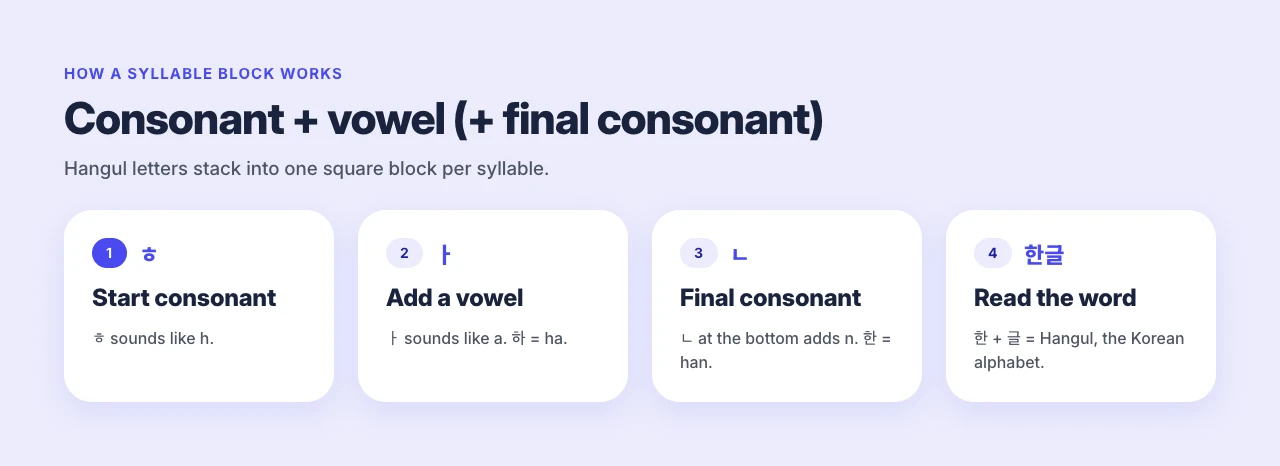 Consonant, vowel, then an optional final consonant: one block per syllable.
Now read the name of the alphabet itself. ㅎ + ㅏ + ㄴ = 한 (han). ㄱ + ㅡ + ㄹ = 글 (geul). Together, 한글 (Hangeul).
One block is always one syllable, so you can count syllables before you read. 사랑해요 has four blocks, so it has four syllables: sa-rang-hae-yo.
Final consonants (batchim)
The consonant at the bottom of a block is called 받침 (batchim). Many letters can sit there, but they make only 7 end sounds: k, n, t, l, m, p, and ng. So several letters sound the same at the end of a block.
| End sound | Letters at the bottom | Example |
|---|---|---|
| k | ㄱ ㅋ ㄲ | 부엌 (bueok), kitchen |
| n | ㄴ | 산 (san), mountain |
| t | ㄷ ㅅ ㅆ ㅈ ㅊ ㅌ ㅎ | 옷 (ot), clothes; 꽃 (kkot), flower |
| l | ㄹ | 물 (mul), water |
| m | ㅁ | 밤 (bam), night |
| p | ㅂ ㅍ | 밥 (bap), rice; 앞 (ap), front |
| ng | ㅇ | 방 (bang), room |
The k, t, and p end sounds are short and closed. Your mouth moves into place, but you do not release it. 밥 ends with your lips shut, not "bap-uh." 꽃 starts with ㄲ, a double consonant you will learn next, and its ㅊ at the bottom is said as a t.
One more rule makes real words easier. When the next block starts with a silent ㅇ, the final consonant moves into that empty slot. 음악 (music) is written eum + ak, and you say it eu-mak. 한국어 (the Korean language) sounds like han-gu-geo. The letter also gets its own sound back: 옷 alone ends in t, but 옷이 sounds like o-si.
Some blocks have two letters at the bottom, like 닭 (dak, chicken). Leave those for later.
A two-day plan to read Hangul
Plan on two or three short sessions a day. Say every letter out loud as you write it.
Day 1: the letters
- Morning: the vowels. Write each vowel five times with ㅇ in front: 아 야 어 여 오 요 우 유 으 이.
- Sort them. Put the tall vowels in one group and the flat vowels in another. Then find the four with a y.
- Afternoon: the consonants, in families. ㄱ ㅋ. ㄴ ㄷ ㅌ ㄹ. ㅁ ㅂ ㅍ. ㅅ ㅈ ㅊ. ㅇ ㅎ.
- Evening: every consonant with ㅏ. Write 가 나 다 라 마 바 사 아 자 차 카 타 파 하. Cover the chart and test yourself.
Day 2: blocks and real words
- Morning: build blocks. Make a grid with five consonants down the side and five vowels across the top. Fill in every block. Check that tall vowels go right and flat vowels go below.
- Add batchim. Read 산, 물, 밤, 밥, 방. Then say the 7 end sounds from memory.
- Afternoon: read real words. Cover the romanization, read the word, then check.
- 한국 (Hanguk): Korea. 한 + 국. The ㄱ at the bottom of 국 is a short k.
- 서울 (Seoul): Seoul. 서 (seo) + 울 (ul). The ㄹ at the bottom is an l.
- 김치 (gimchi): kimchi. The soft ㄱ at the start is why English spells it with a k.
- 사랑해요 (saranghaeyo): I love you. 해 uses ㅐ (ae), a compound vowel. For now, say it like the e in "bed."
- Evening: read anything. A menu, a shop sign in a photo, or the subtitles of a clip. Do not aim for speed. Aim to sound out every block.
You will read slowly at first. That is normal. Speed comes from reading real words many times.
Try Tokki free: practice Hangul with real words in Tokki.
Practice with real Korean
After the weekend, the next step is to read Korean made for Korean speakers, a little every day.
If you want a Hangul learning app that keeps going after the alphabet, this is what Tokki is for. You scroll a feed of short clips from Korean creators, and the subtitles are split into words. Tap any word to see its meaning, its sound with romanization, a breakdown into parts, an explanation, and examples. Tap 밤이면, for example, and you see bamimyeon and the parts 밤 + -이면. That is the batchim rule from above: the ㅁ of 밤 moves into the silent ㅇ. Save a word in one tap, and it comes back on a review card that you mark Again, Hard, Good, or Easy.
If you are still on the letters, the Hangul lessons in Tokki have you trace each letter by following an arrow.
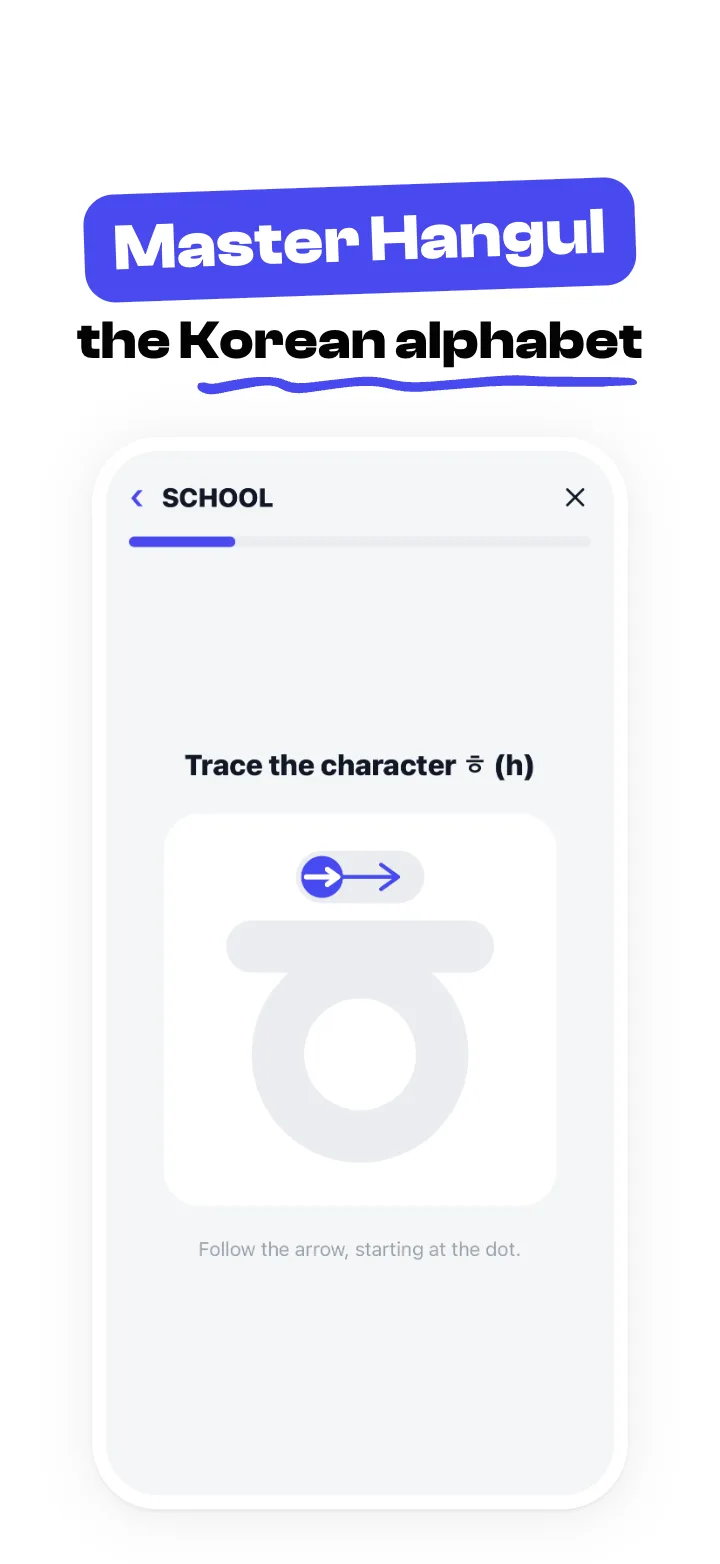 Trace each letter in a Tokki Hangul lesson.
Tokki does not teach grammar chapter by chapter, and it does not ask you to speak. For a full path that covers grammar and speaking, read the best way to learn Korean. If you want to spend nothing, see the best free Korean learning apps.
What to learn next
Hangul has a few more letters, each built from ones you already know.
- Double consonants: ㄲ ㄸ ㅃ ㅆ ㅉ. These are tense versions of ㄱ ㄷ ㅂ ㅅ ㅈ. Say them with a tight throat and no puff of air, as in 토끼 (tokki, rabbit) and 빵 (ppang, bread).
- Compound vowels: ㅐ ㅔ ㅘ ㅝ ㅢ and others. They join two basic vowels. ㅘ is ㅗ + ㅏ (wa), as in 과자 (gwaja, snack). ㅝ is ㅜ + ㅓ (wo). ㅢ is ㅡ + ㅣ (ui), as in 의사 (uisa, doctor). In everyday speech, ㅐ (ae) and ㅔ (e) sound almost the same.
Learn these as you meet them in real words. Download Tokki and read your first clip tonight. Your first 7 days are free, on iPhone and Android.
Frequently asked questions
How long does it take to learn Hangul?
Most beginners can learn the 24 basic letters in a few hours and sound out simple words after a weekend of practice. Reading at a comfortable speed takes a few more weeks of reading a little every day. Read real words daily instead of rereading the chart.
Should I learn Hangul or romanization first?
Learn Hangul first. Romanization is a rough guide, and it misleads you on sounds English does not have. The spellings eo and eu each stand for one vowel, and 김치 is spelled gimchi but starts closer to a k. Signs, subtitles, and textbooks use Hangul, so you will drop romanization anyway.
Is Hangul hard to learn?
No. Hangul is one of the easiest parts of Korean. It has 24 basic letters, the shapes follow a system, and each block is one syllable. The harder parts come later: a few vowels that sound alike, like ㅐ and ㅔ, and sound changes when letters meet. Those take practice, not memory work.
What is the best app to learn Hangul?
Several apps teach Hangul well. Duolingo's Korean course starts with Hangul, and the course is free. Tokki has Hangul lessons where you trace each letter, then lets you read the same letters in the subtitles of real Korean clips. Tokki is free for 7 days, then a monthly or yearly plan. For a full comparison, see the best apps to learn Korean.